

Last Updated on September 26, 2026
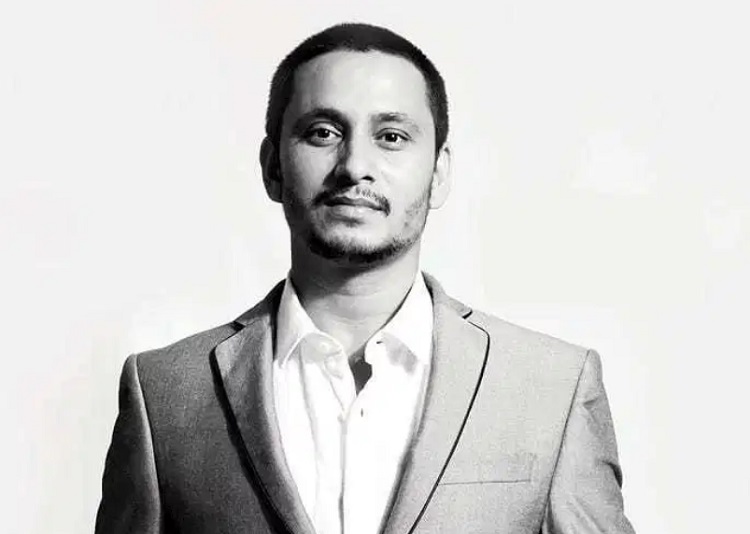
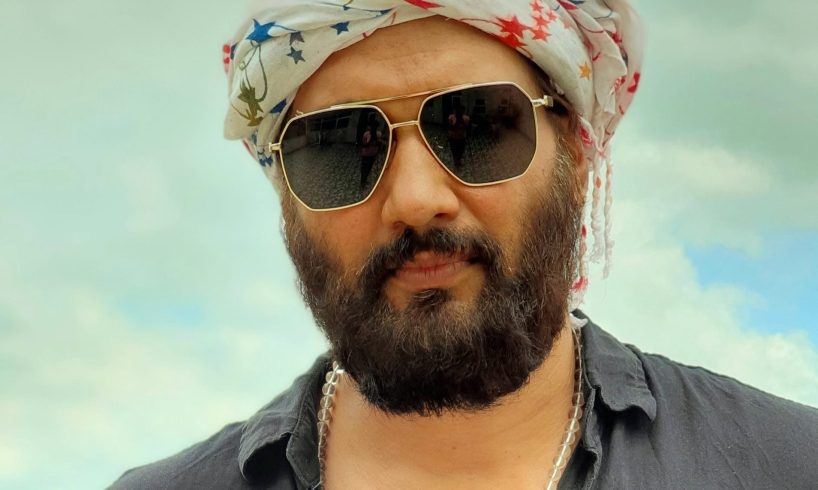
Nikhil Upreti is one of the most recognizable names in Nepali cinema — an actor, stuntman, director, producer and martial artist whose career has spanned more than two decades. Known across Nepal simply as “Nikhil Dai” or the “Action King,” he built his reputation on death-defying stunts performed without a body double, later transitioning into direction and production while remaining the industry’s most enduring action star. He entered the world of Nepali movies with his debut film Pinjada, released in 2000, a movie remembered even today for the stunt that launched his career. He was born on 10 August 1974 in Sarlahi, and his age is 52 years old. His height is 5 feet 8 inches tall. His net-worth is estimated at around 11.5 Crore, though, like most Nepali celebrity finances, this figure is not officially disclosed and should be treated as an approximation. He is the son of father Govinda Upreti and mother Bhoj Kumari Upreti.
He is also an accomplished Karate Master — a Black Belt holder — and this martial arts background is the foundation on which his entire stunt career was later built. Nikhil Upreti has been honoured many times at both national and international levels. He was titled “Best Actor in National Films” in 2005 for his role in Hami Tin Bhai, and he later received the Rastriya Nagarik Swarna Samman in 2006 for his overall contribution to Nepalese cinema.
Nikhil Upreti’s Latest Movie: Acharya (2026)
After several quieter years, Nikhil Upreti has returned to the big screen — and to the director’s chair — with Acharya, a large-scale action entertainer that he has written, directed and starred in through his own production house, Nikhil Upreti Production Pvt. Ltd. The film is produced by Krishna Bhattarai, with Mithilesh Tiwari as executive producer, and brings together both Nepali and Indian talent, including co-star Purnika Sijapati in her feature-film debut, alongside Deep Raj Rana and Promod Agrahari. The action has been choreographed by Sukraraj Shah, with cinematography handled by Saurav Lama, Mannu BK and Nawaraj Krishna Thapa. The film’s trailer, unveiled at a special event in Kamalpokhari, Kathmandu, showcases the kind of elaborate fight choreography and large-scale stunt work that first made Upreti famous, suggesting he intends Acharya to be a full-blooded return to the mass-action cinema that built his career. The film has been scheduled for a theatrical release on 25 September 2026 (Asoj 9, 2083), with distribution in Nepal handled by Manoj Rathi and overseas distribution through Seven Seas International.
Nikhil Upreti’s Personal Life And Married Life
Nikhil Upreti’s personal life has been as widely discussed in Nepal as his film career. He married Kopila Upreti of Noubise, Dhading, in 2002, following an eight-year relationship. The couple had a son together, but the marriage eventually ended in divorce.
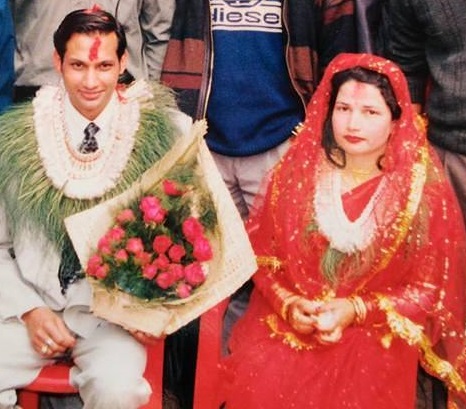
Some years later, while working in Mumbai, Nikhil Upreti grew close to fellow Nepali actress Sanchita Luitel, and the two married in 2009. Sanchita had also been previously married before the two came together. The relationship drew considerable media attention in Nepal at the time, but the couple has remained together since, going on to have two children and continuing to work together in the film industry to this day.

Sanchita Luitel has herself remained a familiar face in Nepali cinema, having built her own career as an actress independent of her marriage, and the pair are often seen supporting each other’s projects publicly, occasionally appearing together at film promotions and industry events.
View this post on Instagram
In interviews over the years, Upreti has generally kept the finer details of his household relatively private compared to how openly he discusses his film work, preferring to let his on-screen output speak for him. What is consistently reported, however, is that family life in Mumbai and Kathmandu, split between two children from his second marriage and a son from his first, has remained an anchor for him even through the busiest stretches of his filming schedule.

Why is Nikhil Upreti’s wife, Sanchita Luitel, not being seen in the promotional events and marketing materials for his directorial movie Acharya?
The absence of actress and producer Sanchita Luitel from the active, public promotional campaigns and trailer launches for Nikhil Upreti’s movie Acharya has sparked intense speculation within the Nepali entertainment industry. While Sanchita was heavily involved in the early stages of the project under Nikhil Upreti Productions—even being credited as a core producer and choreographer—her name and presence became notably hidden or missing from recent official posters and public events leading up to the film’s September 25, 2026 theatrical release. This sudden change fueled widespread media rumors regarding potential personal or professional distances between the celebrity couple. However, during recent interviews, Nikhil Upreti dismissed the sensationalized rumors of a severe fallout, and both have kept details surrounding their personal life strictly private.
Additionally, Sanchita has continued to quietly support the project online and interact with updates for Acharya on social media, indicating that her physical absence from the promotional spotlight does not mean a complete severing of ties with the film.
Early Life, Family And Childhood
Nikhil Upreti was born and raised in Piprabhitta, Sarlahi, in a family with two sisters and a brother. From a young age he showed an unusual interest in sports, particularly football and karate, and it was karate that would go on to define much of his adult life and career. His discipline in martial arts eventually earned him a black belt, and this athletic, combat-ready foundation is what later made him a natural fit for the physically demanding stunt work he became famous for.
He completed his early education in Birgunj and later in Kathmandu. Rather than settling into a conventional career after his studies, Upreti moved to Mumbai in search of opportunities in the Indian film industry. It was a bold decision for a young man from Sarlahi, but it set the course for everything that followed. In Mumbai, he worked as an assistant fight director and stunt performer, slowly building contacts and honing his craft on real film sets rather than in a classroom. He also completed a formal diploma in acting from Roshan Taneja’s acting studio in Mumbai, a school that has trained several well-known names in Hindi cinema.
His hard work in the Mumbai stunt circuit did not go unnoticed. Nikhil Upreti was eventually selected as one of the stuntmen working with Bollywood megastar Amitabh Bachchan, an association that speaks to how seriously he was regarded even outside Nepal. During this period, financial pressure and the practical difficulty of establishing a full-time acting career in Nepal meant that stunt work in India became his primary livelihood for several years. Rather than treating his two countries of work as separate chapters, he ran them in parallel — building his name in the Indian stunt industry while continuing to contribute to and shape the Nepali film industry whenever the opportunity arose.
This dual life was not an easy one. Moving to a city as large and as competitive as Mumbai with no industry connections meant starting from the bottom, doing uncredited stunt and body-double work long before his name ever appeared in a Nepali film credit. Those years are frequently cited by film writers as the reason his on-screen fights in Nepali cinema looked noticeably more polished and dangerous than what audiences were used to at the time — he was, quite literally, bringing trained Bollywood stunt techniques home with him. It is this hybrid background, part Kathmandu, part Mumbai, that many credit for turning him from just another leading man into Nepali cinema’s defining action star of his generation.
Nikhil Upreti Movie Career
Upreti’s debut film Pinjada (2000) is remembered less for its plot and more for a single, legendary moment: he leapt from the seven-storey Kantipur Publication building in Kathmandu with no harness, no wires and no body double. The stunt instantly made him a household name and set the tone for the kind of actor he would become — one whose star power was inseparable from his physical daring.
Through the 2000s, Nikhil Upreti went on an extraordinary run at the Nepali box office, appearing in well over a hundred films across the decade. Some of his most commercially and critically significant works from this era include Shibashakti, Agnipath, Ram Laxman, Hami Tin Bhai, Dhadkan, Papi Maanche and its sequel Papi Manchhe 2, Abhimanyu, Nikhil Dai, Savdhaan, and Daag. Two of these — Papi Manchhe and Hami Tin Bhai — have each been credited at different points as the highest-grossing Nepali film of all time, and Hami Tin Bhai also earned him the National Film Award for Best Actor in 2005.
After spending several years dividing his time between stunt work in Mumbai and acting assignments in Nepal, Upreti stepped away from Nepali cinema for roughly five to six years. His return was anything but quiet: in 2015 he wrote, directed and starred in Bhairav, a film that marked his official debut as a filmmaker and went on to become one of the highest-grossing Nepali releases of that year. The film also won him a Special Award at the Dcine Awards, and he later picked up a Special Award for Career Achievement at the Box Office Film Awards in 2017.
Between his early-2000s breakthrough and his 2015 comeback, Upreti’s filmography reads almost like a decade-by-decade map of Nepali commercial cinema itself. The early-to-mid 2000s brought family and action dramas such as Kurukshetra, Santaan, Mayako Jaal, Kartavya and Karma Yoddha, alongside the mythologically titled action films Krishna Arjun and Karan-Arjun that leaned into larger-than-life good-versus-evil storytelling popular with Nepali audiences at the time. By the later 2000s he was appearing in multiple releases a year, including Trinetra, Khalnaayak, Dobato, Samjhanaa, and Jaya Shiba Shankar, before moving into the early 2010s with Parichaya, Debyani, Timi Jaha Vaye Pani and Daag, several of which reunited him with regular collaborators from earlier in his career. This sheer breadth of work across genres — mythological drama, family melodrama, and hard-edged action — is part of why he remained bankable at the box office for so long, even as trends within Nepali cinema shifted around him.
He continued to build his post-comeback filmography with movies such as Lootera, King, Nirbhay, Rudra, and Sanrakshan. In 2017 he starred as the lead in Radhe opposite Priyanka Karki, a film that dealt with inter-caste marriage and the way Nepali society responds to relationships that cross traditional caste lines — a socially conscious departure from his usual high-octane action roles. He made a special appearance in Timi Sanga (2018) and returned to full-length acting with Pinjada Back Again the same year, a title that consciously echoed the film that had launched his career nearly two decades earlier. His filmography from this stretch also includes Villan and Commitment 60 Hours (2019), for which he earned a nomination for Best Actor in a Leading Role at the Kamana Film Awards.
His top movies are
- Ram Laxman
- Dhadkan
- Karma Yoddha
- Bhai-Bhai
- Papi Maanche
- Agnipath (Nepali film)
- Bhagya
- Daag (Nepali film)
- Timi Jaha Vaye Pani
- Debyani
- Pahilo Pahilo Maya
- Bish
- Bhairav
- Radhe
He has also worked alongside Nepali film industry Super Star Rajesh Hamal, one of several high-profile collaborations across his career.
What is particularly notable about Nikhil Upreti’s box-office run through the 2000s is its sheer volume. Across the decade he appeared in well over a hundred Nepali films, an output that few of his contemporaries could match, and one that made him a constant presence in cinema halls across the country — from Kathmandu multiplexes to the small-town theatres of the Tarai and hill regions where his action films found their most devoted audiences. It was this rural and small-town fan base, built film after film through the mid-2000s, that gave him the kind of mass popularity that outlasted individual box-office numbers and turned him into a genuine cultural figure rather than just a working actor.
Karate, Discipline And His Spiritual Side
Away from the cameras, Nikhil Upreti is often described by those who know him as a disciplined, focused and grounded individual — traits that trace directly back to his years of karate training. His black belt background did not just give him the physical skill for stunt work; it also instilled the kind of mental discipline that he has, in various public appearances and interviews over the years, connected to a broader interest in yoga, balance and personal well-being. Several profiles of the actor note his continued commitment to fitness and inner discipline as being just as central to his identity as his on-screen action persona, and he has occasionally spoken about drawing on these practices to sustain a physically demanding career for over two decades.
This mindset is arguably what has allowed him to keep performing his own stunts well past the age when most action stars move on to safer, dialogue-driven roles. Maintaining the flexibility, strength and reflexes required for hand-to-hand fight choreography and high-fall stunts into his forties and fifties is not accidental; it reflects a training regimen rooted in the same martial-arts and mind-body discipline he picked up as a young black belt in Sarlahi. As with much of what is written about celebrities’ private beliefs, the full extent of this personal philosophy is something only Nikhil Upreti himself could describe in detail, but it is a recurring thread in how he is discussed by fans and film writers alike, and it fits neatly with the image of a performer who treats his body as a professional instrument rather than simply a screen presence.
- The “Sambodhi” phase (2021, during COVID lockdown): He stopped cutting his beard once lockdown began in Nepal and kept it long for close to a year. He said beauty lies in the mind, that inner beauty is what truly matters in a person, and that the lockdown period gave him time to slowly start understanding himself.
- This phase was tied to a program he called “Sambodhi” (roughly “awakening/self-realization”), through which he began sharing his personal experiences and life philosophy publicly — he had done similar sessions in Butwal and Pokhara around the same time.
- His karate black-belt background and the discipline built through years of stunt work are often linked to this reflective, disciplined mindset rather than to any formal religious practice.
- A few international film databases/profiles (e.g., TMDB) describe him as having “a deep commitment to yoga and spiritual philosophy,” but this specific claim comes from a lower-reliability, largely unsourced profile, so I’d treat it as loosely supported rather than confirmed.
- In a 2025 podcast interview, he also touched on balancing his busy film career and family life with nurturing his “spiritual side,” though without much further elaboration in what’s publicly available.
Physical Stats And Quick Facts
- Full/Screen Name: Nikhil Upreti (also credited as Nikhil Uprety)
- Date of Birth: 10 August 1974
- Birthplace: Sarlahi, Nepal
- Height: 5 feet 8 inches
- Profession: Actor, director, producer, stunt performer, martial artist
- Martial Arts: Karate (Black Belt)
- Debut Film: Pinjada (2000)
- Years Active: 2000 – present
- Spouse(s): Kopila Upreti (divorced); Sanchita Luitel (married 2009)
- Latest Film: Acharya (2026)
Awards And Recognition
Across his career, Nikhil Upreti has picked up a number of honours that reflect both his box-office pull and his standing within the industry:
- Best Actor, National Film Award (2005) — for Hami Tin Bhai
- Rastriya Nagarik Swarna Samman (2006) — for his overall contribution to Nepalese cinema
- Special Award, Dcine Awards (2016) — for Bhairav
- Special Award for Career Achievement, Box Office Film Awards (2017)
- Best Actor in a Leading Role nomination, Kamana Film Awards (2019) — for Villan
Life Beyond The Screen
Nikhil Upreti has also been described as an activist and humanitarian who has lent his voice to various social causes in Nepal over the years, using his celebrity status to draw attention to issues beyond entertainment. Like many long-serving stars, his career has not been without controversy or public missteps — at one point in the late 2000s, he and fellow actress Karishma Manandhar publicly apologised to fans over their involvement in an extended television advertisement that had drawn criticism, an episode that Upreti has treated candidly rather than avoiding altogether in later interviews.
One of the more striking things Upreti has said about his own career is that, despite being one of the most recognisable faces in Nepali film, actors in the domestic industry are often paid only a fraction of what international stars earn per project. He has pointed to this pay gap as one of the reasons he continued pursuing stunt and acting opportunities in India alongside his Nepali career, treating the two markets as complementary rather than competing paths.
Having now appeared in well over a hundred films across two countries, and having grown from a stunt double doubling for others to a director shaping his own productions, Nikhil Upreti remains one of the most enduring names to come out of the Nepali film industry — recognised across generations, from viewers who grew up on his 2000s action hits to newer audiences discovering him through Bhairav, Radhe, and now Acharya.
Nikhil Upreti’s Legacy In Nepali Cinema
It is difficult to talk about action cinema in Nepal without eventually talking about Nikhil Upreti. He arrived at a time when Nepali film action sequences were still relatively basic, and through sheer physical risk-taking — jumping off buildings, performing his own fight choreography, refusing body doubles — he reset the audience’s expectations of what a homegrown action star could deliver on screen. That reputation opened doors for him in India as a stuntman, and the skills he brought back from that experience, in turn, raised the technical standard of fight sequences in Nepali films more broadly.
His transition into writing and directing with Bhairav in 2015 also marked an important second act, showing that his understanding of action cinema went beyond performing in front of the camera. With Acharya now heading into cinemas in September 2026 under his own production banner, Upreti continues to combine both roles — actor and filmmaker — more than two decades after Pinjada first introduced him to Nepali audiences.
Nikhil Upreti: Frequently Asked Questions
When was Nikhil Upreti born?
He was born on 10 August 1974 in Sarlahi, Nepal.
What was Nikhil Upreti’s debut film?
He made his debut with Pinjada in 2000, a film remembered for his stunt jump from the seven-storey Kantipur Publication building.
Is Nikhil Upreti married?
Yes. He was first married to Kopila Upreti, a marriage that ended in divorce, and he has been married to actress Sanchita Luitel since 2009.
How many films has Nikhil Upreti acted in?
He has appeared in well over a hundred films across his career in both the Nepali and Indian film industries.
What is Nikhil Upreti’s latest movie?
His latest project is Acharya, an action film he has written, directed and starred in, scheduled for release on 25 September 2026.
Does Nikhil Upreti do his own stunts?
Yes, performing his own stunts without a body double has been a defining feature of his career since his 2000 debut.
To keep up with his latest projects and public appearances, fans can follow Nikhil Upreti on Facebook, Instagram and other social media platforms, where he continues to share updates on his ongoing film work.